TF-NOVA Line Laser LiDAR Sensor (14m)

SKU: SEN0671

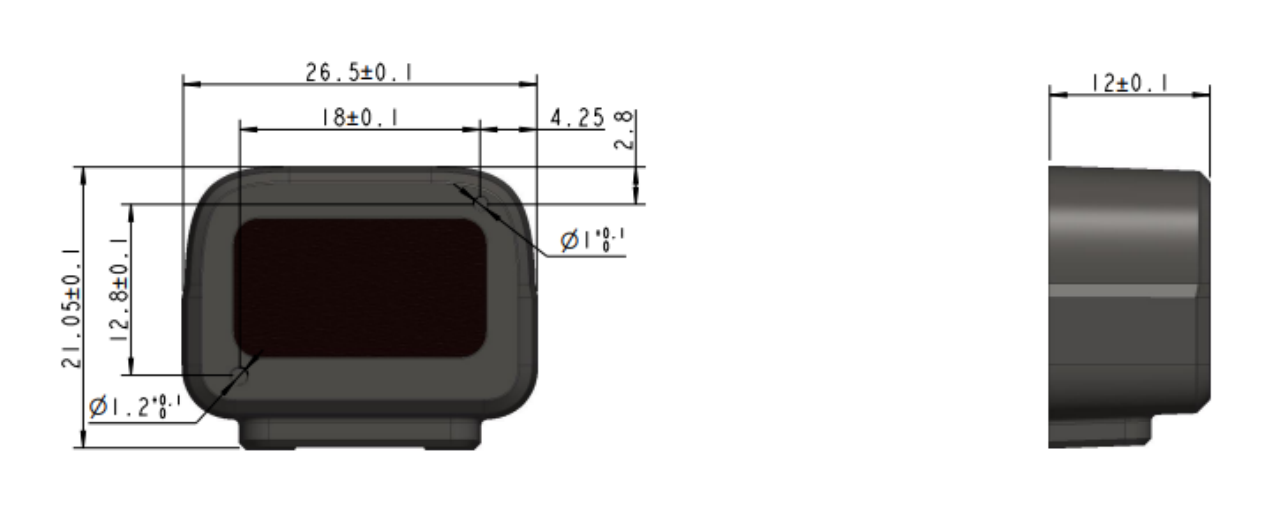
TF-NOVA is a Pulse Time-of-Flight (PToF) sensor that calculates distance by measuring the time between emitted and received laser signals. It features a 14°×1° line-shaped detection area (25×1.7 cm² beyond 1m), ultra-compact dimensions (26.5×21.05×12mm, ~7cm³) for easy integration into space-constrained designs, stable outdoor detection (5cm black obstacles within 2m under sunlight/night), and supports UART/I2C/I/O interfaces.

Overview of TF-NOVA Line Laser LiDAR Sensor-14m

Downloadable Resources

  • Docs
  • Tech Specs
  • Specification

    • Performance Parameter
    Parameter Specification
    Measurement Range ≥14m@90%reflectivity, 0Klux; ≥13m@10%reflectivity, 0Klux; ≥7m@90%reflectivity, 100Klux; ≥4m@10%reflectivity, 100Klux
    Blind Zone 0.1m
    Accuracy ±5cm @ 0.1-4m
    Precision <1cm (1σ) @ 0.1-4m
    Distance Resolution 1cm
    Frame Rate 1-900Hz (default: 100Hz)
    • Optical Performance
    Parameter Specification
    Light Source VCSEL
    Central Wavelength 905nm
    Laser FOV 14°×1°
    Laser Safety Class 1 Eye-safe [EN60825]
    • Mechanical & Electrical
    Parameter Specification
    Avg Power Consumption <500mW
    Inrush Current <850mA
    Startup Time <1s
    Operating Voltage DC 5V ±5%
    Operating Temperature -25℃ ~ +70℃
    Storage Temperature -30℃ ~ +80℃
    Dimensions 26.5×21.05×12.0mm
    Weight <5g
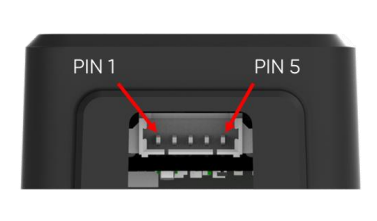
    Hardware Interface 1.25mm-5Pin
    Front Window Protection IP65

    Pinout

    Num Label Description
    PIN1 Red line 5V
    PIN2 Black line GND
    PIN3 Yellow line TXD(3.3V)/SCL
    PIN4 Green line RXD(3.3V)/SDA
    PIN5 Blue line IO

    TF-NOVA switches the output mode through instructions and registers. The default is UART output. For detailed instructions, please refer to the user manual.

    FAQ

    • What voltage does TF-NOVA operate at and does it work at 3.3V?
      TF-NOVA operates at 5V, and does not work at 3.3V
    • How are UART and I2C output modes switched?
      through instructions or registers

    Explore More Related Questions >

    Was this article helpful?

    TOP