mmWave - 80GHz Liquid Level Detection Sensor (40 Meters)

SKU: SEN0676

This 80GHz high-precision mmWave radar module is for liquid level monitoring. Using FMCW tech, it offers 0.15–40m range, 1mm resolution, ±5mm accuracy. Pre-installed lens provides ±3° beam angle for better directivity. It supports non-contact installation, avoids corrosive liquids, and works stably in complex environments. Suitable for lakes, rivers, reservoirs, sewage pipelines, and mountain torrent warnings.

Overview of mmWave - 80GHz Liquid Level Detection Sensor (40 Meters, UART)
  • Docs
  • Tech Specs
  • Specification

    Parameter Details
    Transmit frequency 77–81GHz, 4GHz bandwidth
    Output power (EIRP) 13–20dBm
    Beamwidth (-3dB) Horizontal ±25°, Vertical ±25°
    Beamwidth (-3dB) with external lens Horizontal ±3°, Vertical ±3°
    Modulation mode FMCW
    Ranging range 0.15–40m
    Accuracy ±5mm
    Resolution 1mm
    Startup time 100ms (fastest)
    Operating voltage 3.5–5V
    Operating current 30mA
    Output UART (Modbus protocol)
    Operating temperature -45°C to +85°C
    Module dimensions 35×35×1.2mm
    Module weight 5g
    Weight with installed lens 46g

    Pinout

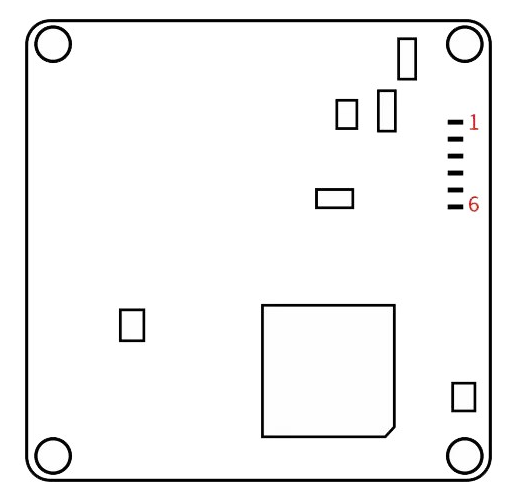
    1.25-6Pin terminal interface

    Pin Function description
    1 VCC 3.7~5V
    2 GND
    3 NC
    4 NC
    5 UART_TX
    6 UART_RX

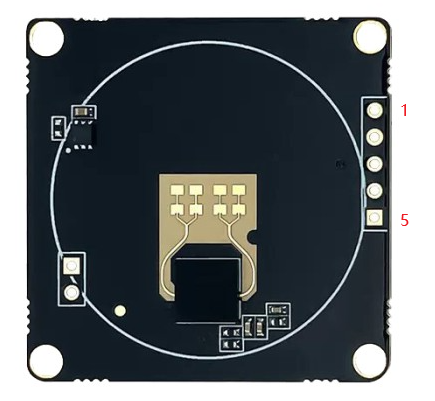
    Right side pad interface

    Pin Function description
    1 VCC 3.7~5V
    2 GND
    3 NC
    4 UART_RX
    5 UART_TX

    FAQ

    • What should be done if the data is abnormal?
      Press the reset button on the development board to ensure that the installation height is set successfully
    • Has the measurement zero point of the millimeter wave module been calibrated?
      The measurement zero point of the millimeter wave module has been calibrated from the antenna surface to the lens end at the factory
    • Does the range need to be set?
      The range does not need to be set, the range will change automatically according to the installation height, and the maximum range is 40m

    Explore More Related Questions >

    Was this article helpful?

    TOP