
Reference
Principle
Human detection
Compared to other types of human presence sensors, such as infrared sensors, the C4001 (12m) millimeter wave presence sensor has the advantage of detecting both static and moving objects. It also has a relatively strong anti-interference ability, making it less susceptible to factors such as temperature changes, variations in ambient light, and environmental noise. Whether a person is sitting, sleeping, or moving, the sensor can quickly and sensitively detect their presence.
| Millimeter-wave Presence Sensor | Infrared Sensor | |
|---|---|---|
| Sensing Principle | TOF radar principle + Doppler radar sensing principle (active detection) | Pyroelectric infrared sensing principle (passive radiation) |
| Motion Sensitivity | Can detect presence, slight movement, and motion of human body | Can only detect motion and close-range slight movement of human body |
| Sensing Range | Can be adjusted to different sensing distances | Sensing range cannot be adjusted |
| Environmental Temperature Impact | Not affected by environmental temperature | Sensitivity decreases when temperature is close to human body temperature |
| Application Environment | Not affected by heat sources, light sources, air flow | Susceptible to heat sources and air flow |
| Penetration Ability | Can penetrate fabrics, plastics, glass, and other insulating materials | Can only penetrate some transparent plastics |
| Distance Measurement Support | Yes | No |
Distance and velocity detection
The C4001 (12m) millimeter wave presence sensor utilizes FMCW modulation for distance and speed measurement. It has a maximum detection range of 12 meters and a speed measurement range of 0.1 to 10 meters per second.
FMCW (Frequency Modulated Continuous Wave) is a type of radar system based on frequency modulation of continuous wave signals. Unlike traditional pulse radar, FMCW radar continuously emits a series of continuous wave signals with gradually changing frequencies while simultaneously receiving the reflected signals. By analyzing the received signals, measurements of parameters such as distance, speed, and angle can be achieved.
Compared to traditional pulse radar technology, FMCW radar can continuously measure the distance of an object. By utilizing the Doppler effect, it can also obtain information about the velocity of the target object. This makes FMCW radar suitable for applications that require tracking the movement of objects. Additionally, FMCW radar can achieve continuous frequency scanning, providing higher measurement resolution. Since it does not require waiting for the return of echo signals, FMCW radar is suitable for applications that require real-time monitoring and tracking of target objects.
What is a millimeter-wave radar sensor?
Millimeter-wave radar technology is a non-contact sensing technology used to detect objects and provide information about their distance, velocity, and angle (in the case of humans, for example). The signals emitted by millimeter-wave sensors fall within the high-frequency spectrum with wavelengths between 24GHz and 300GHz, also known as the millimeter (mm) range.
Installation Method
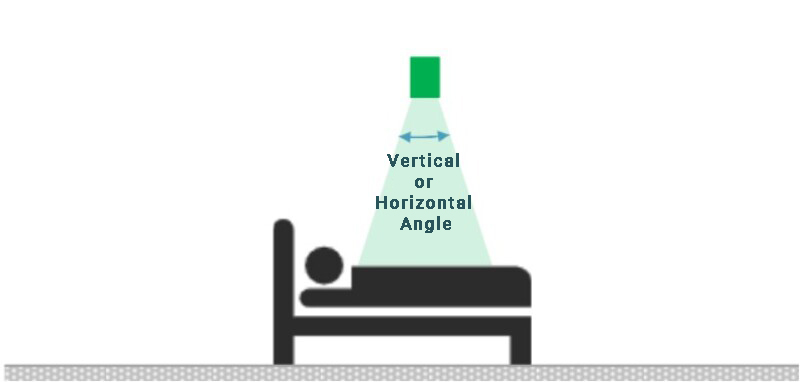
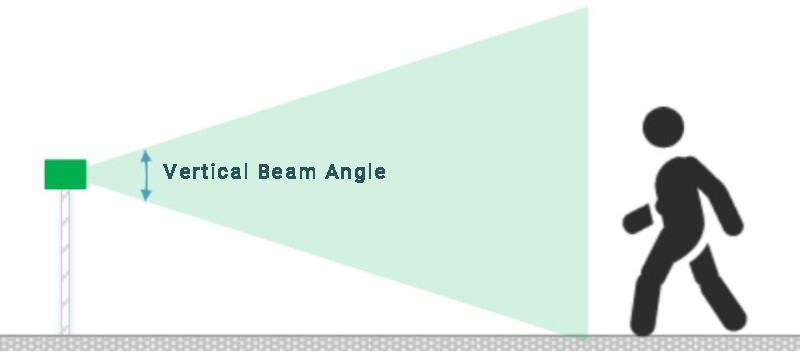
The millimeter-wave human body sensor is sensitive to the installation method, and improper installation can affect the performance and functionality of the sensor. The commonly used installation methods for this module include top installation, bottom installation, horizontal installation, and downward tilted installation.
Top Installation
Bottom Installation

Horizontal Installation
Library
- DFRobot_C4001 library for Arduino, Click to download the DFRobot_C4001 library.
Communication Protocol Description
- Communication Methods: Supports two communication methods, I2C and UART.
- UART Baud Rate: 9600.
- I2C Address: 0x2A/0x2B.
Was this article helpful?